Miriam Cowley
The Dark HalfMiriam Cowley is a literary agent, Rick Cowley’s former wife and professional partner, and a crucial link between the exposure of Thad Beaumont’s secret identity and the murders committed by George Stark. When a persistent investigator asks whether Stark is really Thad, Miriam’s response helps bring the inquiry to an abrupt halt; later, Stark invades her New York apartment and kills her. Through Thad’s automatic writing, her death becomes the point at which his effort to contact Stark turns into a direct, appalling encounter with the killer’s experience.
Identity and Work
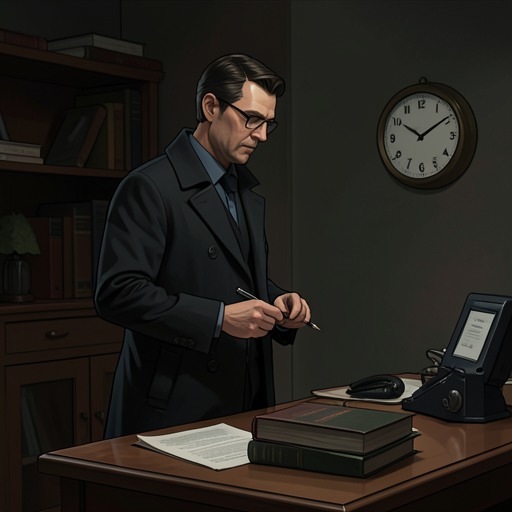
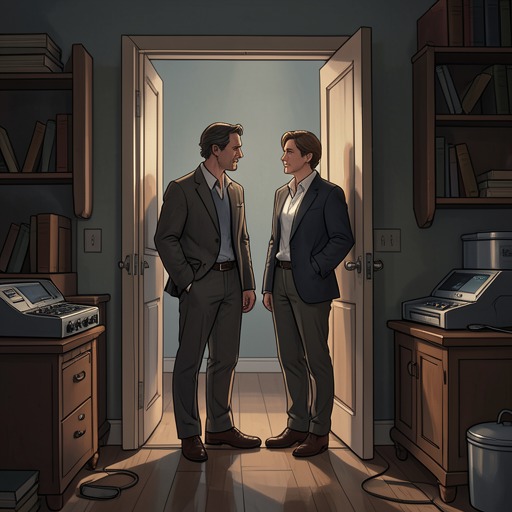
Miriam is Rick Cowley’s ex-wife, but their separation has not ended their professional relationship: she remains his partner in the literary agency. Liz Beaumont describes their arrangement as unusual but amicable. The agency’s shared work makes Miriam a natural point of contact for anyone attempting to investigate Thad’s concealed connection to George Stark.
That connection is tested when Frederick Clawson calls with questions about whether Stark is really Thad Beaumont. Miriam tells Clawson that the identification is true, then mocks the premise by adopting the identity of Dolley Madison and joking that she and Thad will marry. She hangs up and immediately goes to Rick with the warning that someone in Washington, D.C., is probing Thad’s secret identity. Afterward, Clawson’s calls to Cowley Associates are met with quick hang-ups. Miriam’s intervention does not merely dismiss the inquiry: it alerts the agency and helps close off Clawson’s access to information.
The Break-In and Murder
Miriam’s own point of view takes over when she returns to her apartment and finds that her key pushes the door open instead of entering the lock. The lapse is immediately alarming. Having lived in New York for several months, she regards locking the door—even for a short trip down the hall—as an ingrained necessity, not a casual habit. She assumes someone has entered and reasons that the intruder could still be inside, even if a burglary had begun hours earlier.
The danger is not the ordinary theft she first anticipates. George Stark is in the apartment and uses a straight razor to silence and control her. Miriam’s murder marks the violent end of the professional and domestic life glimpsed in Liz’s account: the capable agent who had warned Rick about Clawson is suddenly unable to protect herself from the threat she had helped expose. Stark follows his stated rule concerning women he kills by closing her eyes afterward.
What Thad Learns
Miriam’s death reaches Thad through more than the news of another murder. While attempting to make contact with Stark through automatic writing, he finds that his hand is producing a coherent account of Miriam’s killing. The prose seems to come from Stark’s mind rather than Thad’s, and Thad recognizes the writing as an account by a highly effective author—Stark’s first work of nonfiction, as Thad grimly frames it.
The writing gives Thad reason to reinterpret an earlier conversation at Dave’s Market. He had used a phrase about Stark losing his happy thoughts; now he realizes that the same phrase had been spoken before Miriam was killed. He concludes that, during the murder, he was connected to Stark’s mind without understanding it. The automatic writing has become more than a frightening symptom: it is evidence, from Thad’s perspective, of an intimate psychic link that carries the killer’s words and actions into his own consciousness.
The pages also reveal that Stark made Miriam call Thad, dialing the number for her because she was too frightened to remember it. Thad finds the detail especially disturbing because Miriam had called him many times before. Her momentary inability to recall a familiar number turns an ordinary history of communication into evidence of how completely Stark has seized control of the situation—and how closely Thad’s involuntary writing has followed it.
Consequences and Narrative Role
After the murders, Thad thinks not only about the victims but about their families. He wonders how Rick’s father in Tucson and Miriam’s parents in San Luis Obispo are coping with the murder of an adult child. His attention to the survivors is tied to his belief that he is responsible for what has happened: he cannot decide that he is blameless for Stark, so the deaths and their aftermath become part of the guilt he carries.
Miriam also remains important to the investigation after her death. Alan Pangborn struggles to accept the claim that Thad did not kill anyone or write the mysterious sentence found on victims’ walls. As he tests ordinary explanations against the fingerprints, voice evidence, and the Beaumonts’ insistence that Stark is real, he remembers a phone conversation with Thad from the night the killing spree began. The recollection becomes part of Pangborn’s growing recognition that the case may involve something beyond a conventional murderer. Miriam’s murder therefore has two linked consequences: it deepens Thad’s direct connection to Stark, and it helps force the investigation toward the possibility that Stark exists outside the fiction from which he came.
Significance
Miriam’s role is defined by a sharp reversal. At first, she is a working partner who uses humor and decisiveness to protect a client’s secret; later, she becomes the victim through whose murder that secret and its supernatural implications are made terrifyingly concrete. The transition from agency phone calls to Thad’s involuntary written account binds ordinary professional communication to an impossible form of contact.
Her death also changes the function of writing in the story. Thad’s hand does not simply produce an unexplained message about the sparrows: it records a coherent account of a crime as it is experienced by the person committing it. The written page becomes a channel between Thad and Stark, but also a source of knowledge that Thad does not want and cannot safely treat as fiction. Miriam’s murder is thus both a personal loss within the story and a decisive revelation about the boundary between the author and the character who has become real.